The Ultimate Wedding Planning Checklist: From Engagement to “I Do”
There is a strange little moment after getting engaged when nothing has changed — and somehow everything has. You still wake up in the same bed. You make the same coffee. Your messages look exactly the same. Except now there is a ring on your hand, and every few minutes your eyes seem to find their way back to it.
You tell your family. You call your closest friends. You take approximately seventeen photographs of your hand in different lighting. Someone asks if you've set a date yet, even though you've been engaged for three hours. And somewhere between the champagne and the congratulations, it begins.
So… where do we even start?
Suddenly there are venues to see, guest lists to write, photographers to compare, dresses to try on, flowers to choose and budgets to discuss. Pinterest is already confidently suggesting a colour palette for a wedding you haven't planned. Take your time. You don't have to plan the whole wedding today.
There is an order to all of this — and once you understand it, wedding planning feels considerably less overwhelming. So this isn't a list of one hundred tiny jobs to complete. Think of it instead as a gentle timeline from “We're engaged!” all the way to “We're married.”
First, just be engaged
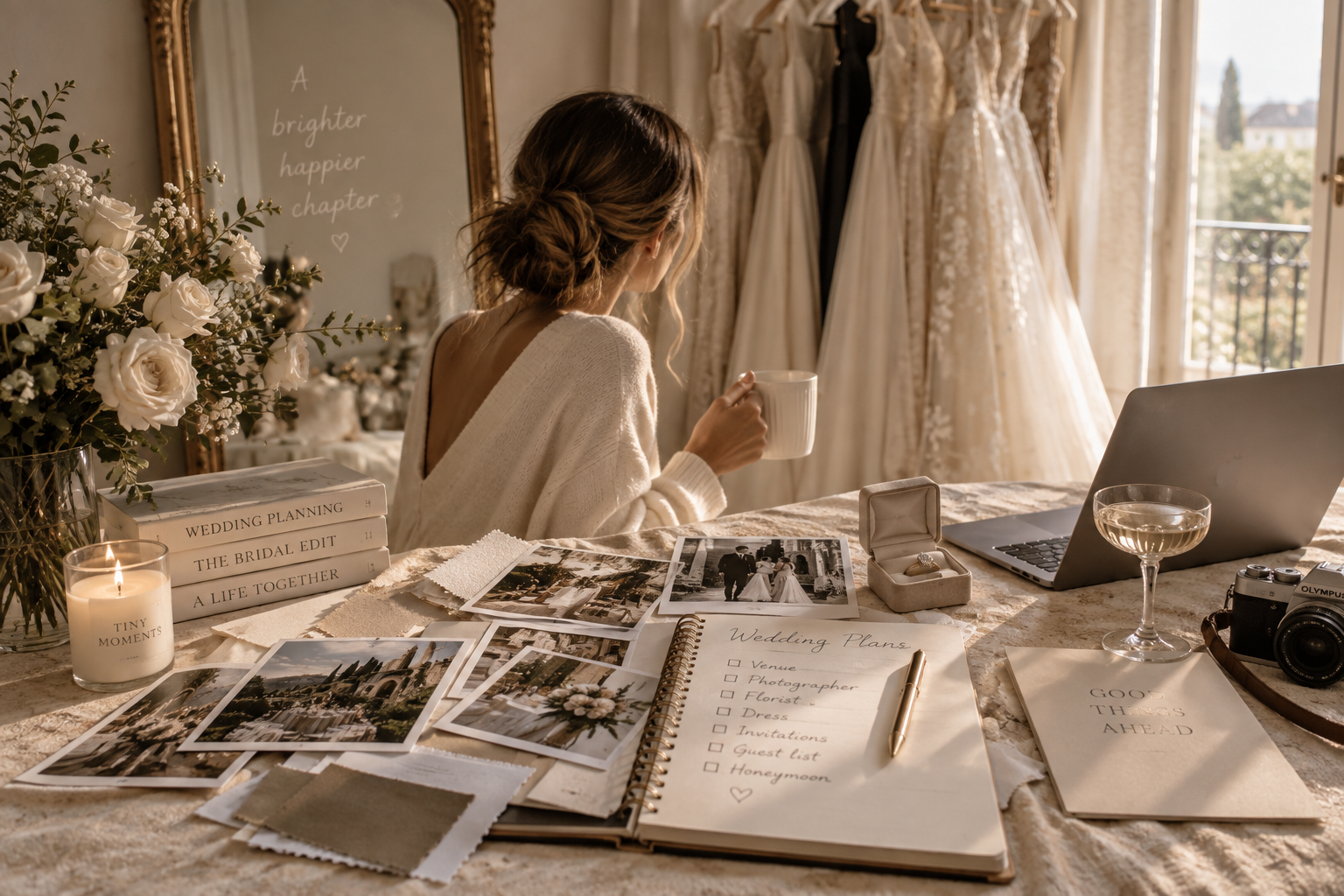
Before spreadsheets. Before venue enquiries. Before trying to understand why chairs can apparently cost so much money. Enjoy this bit.
There will be plenty of time for planning later, but you only get those first few days of being newly engaged once. Go somewhere you love for dinner. Open the bottle you've been saving. Take photographs that aren't intended for Instagram. Tell your favourite people in person if you can. And talk to each other — not about napkin colours, but about what you imagine when you think about your wedding.
Maybe one of you pictures a long table under olive trees somewhere in Italy, with candles flickering as the sun disappears. Maybe the other imagines a huge dance floor surrounded by everyone you've ever loved. Maybe you both quietly realise that neither of you actually wants the enormous traditional wedding everyone assumes you'll have. These conversations matter more than choosing a colour palette. Because before you decide what your wedding will look like, decide what you want it to feel like.
Intimate? Joyful? Elegant? Wild? Relaxed? Romantic?
That feeling becomes your compass later, when there are ten beautiful options and you can't possibly have all of them.
Around a year before: build the foundations
Eventually, the romantic daydream has to meet reality. And reality usually begins with two things nobody particularly wants to discuss over champagne: the guest list and the budget. Do them anyway.
You don't need to know whether Aunt Sarah's boyfriend is coming yet, but you need to know whether you're roughly planning a wedding for 40 people or 140. The same goes for money. Have the uncomfortable conversation early and decide what you can genuinely afford, whether family members are contributing and which parts of the wedding matter enough to you to spend more on. This is also a lovely time to choose your three priorities. Perhaps yours are photography, flowers and the venue. Perhaps your partner cares most about food, music and having everyone stay late enough to witness questionable dancing.
Neither list is wrong. When the budget eventually forces you to choose between the spectacular floral installation and the band you've loved for six years, you'll already know what matters most.
The venue
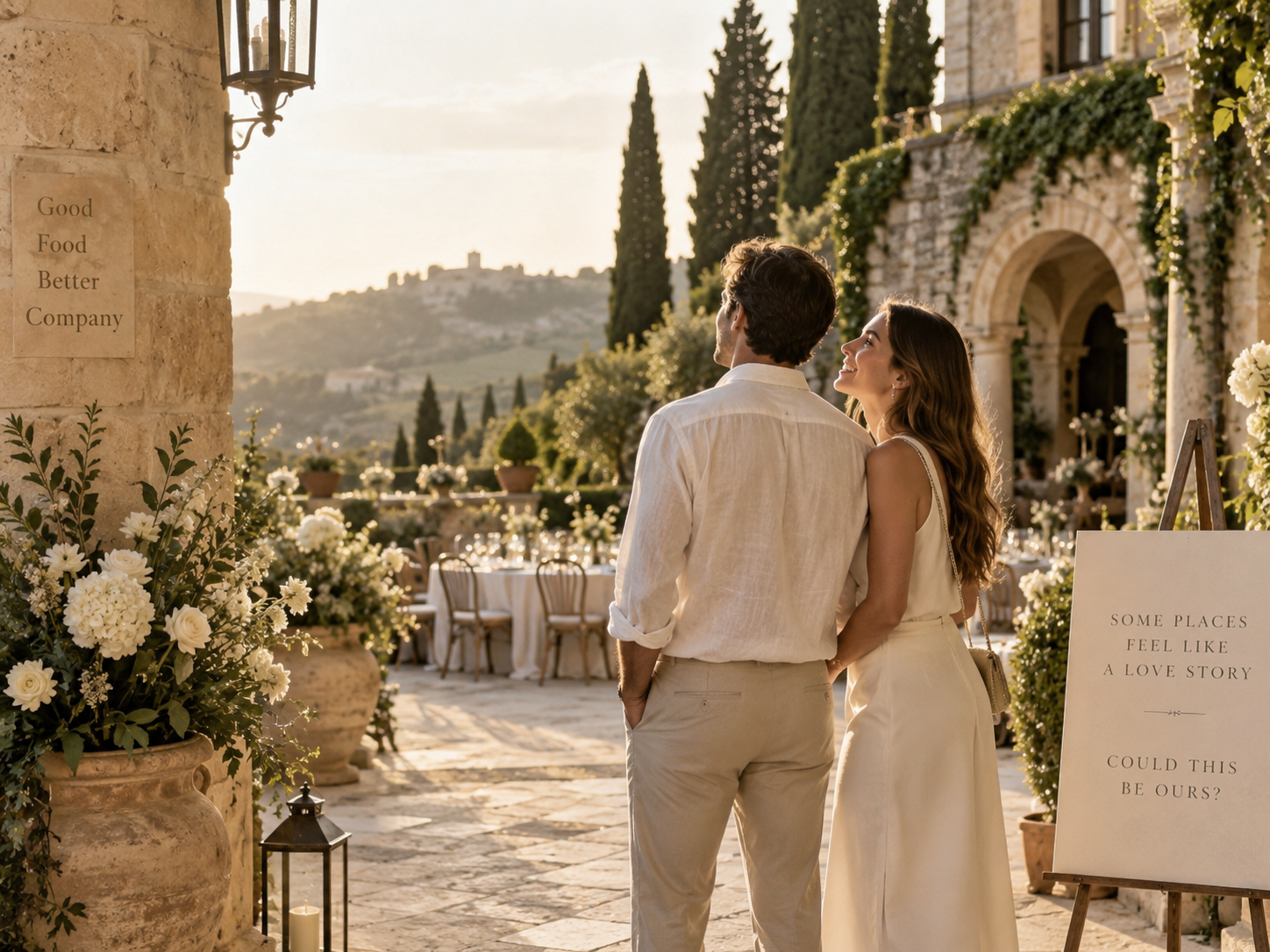
And then comes one of the first truly exciting decisions. The venue is often the moment when an imaginary wedding starts becoming a real one. You walk through a courtyard and think, This could be where we have dinner. You stand somewhere beautiful and suddenly picture the people you love filling the space.
You look at each other. And sometimes you just know. Once the venue and date are confirmed, everything else has somewhere to grow from.
9–12 months before: suddenly it starts looking like your wedding
This is one of my favourite stages of wedding planning. There is still plenty of time, but the blank spaces are beginning to fill.
You start looking seriously at photographers. Don't choose one only because they have three extraordinary photographs on Instagram — look through a complete wedding gallery if you can. Do you love how they photograph quiet moments as much as beautiful portraits?
The nervous hands before the ceremony. Your grandmother laughing at dinner. Your dad fixing someone's buttonhole. Your best friend crying when she promised she absolutely wasn't going to cry. Those are often the photographs that become more precious with time.
This is also when dress shopping might begin. And please know this: you are not required to have the cinematic bridal-shop experience. You may cry. Your mother may cry. Everyone may cry. Or you might look at yourself and say, “Yeah… I think this is the one?” Both experiences count.
This is also when guests start asking questions
Once people know the date, something else happens: the questions begin.
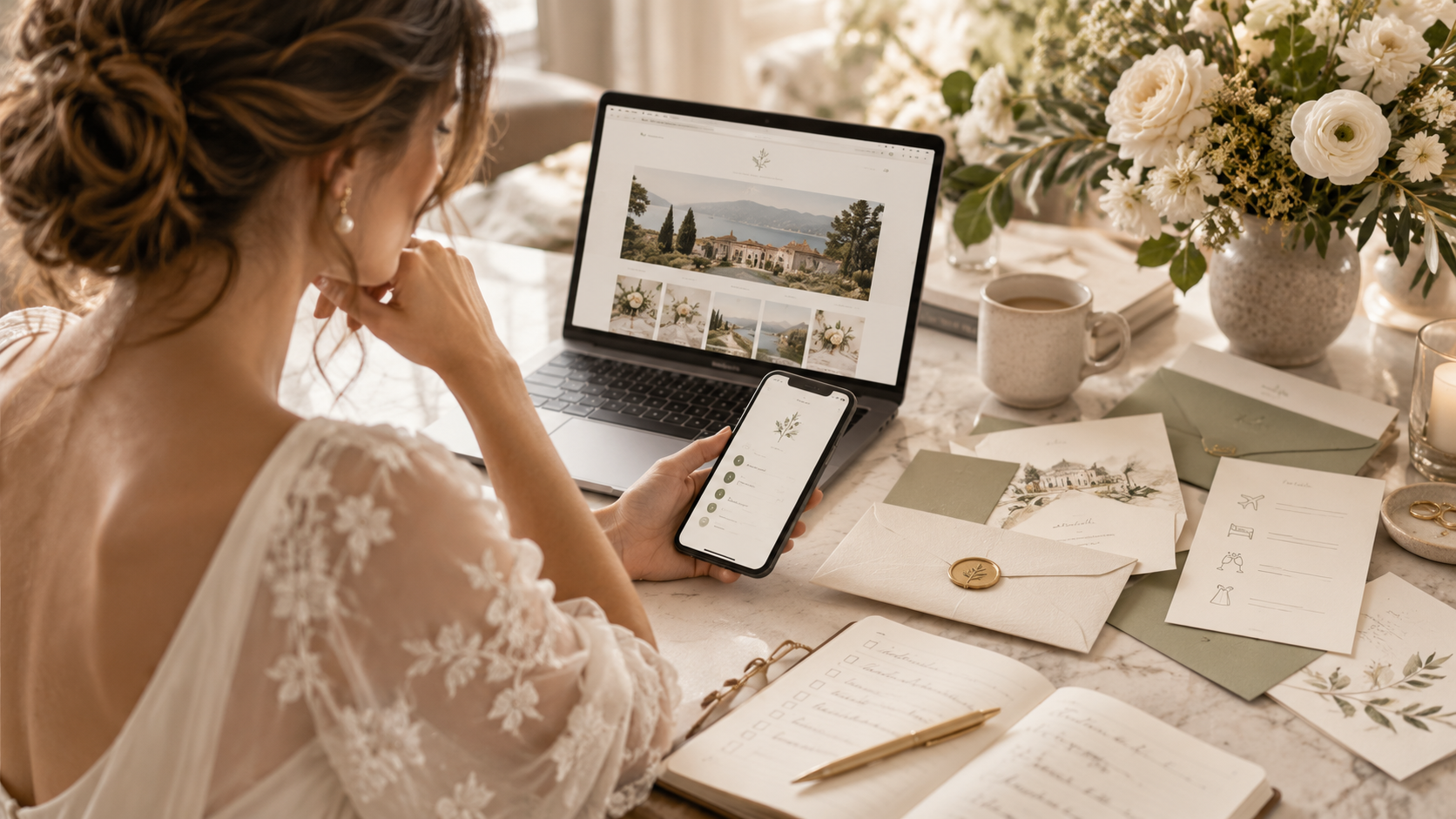
Where exactly is it? Where should we stay? Is it adults only? What's the dress code? Can I bring someone? What time does it start? When do you need our RSVP? And you realise that your beautiful invitation cannot reasonably contain a small novel. This is where having one central place for your wedding information becomes incredibly useful. A wedding website can begin simply with your names, date and location, then grow with your plans. Later you can add your schedule, venue information, accommodation, dress code, travel details, FAQs and RSVP.
And there is another reason I love the idea: your website doesn't have to feel like an administrative noticeboard. It can feel like the beginning of the wedding itself. The colours, typography, photographs and tiny details can give guests their first sense of what you're creating before they ever arrive. A little digital envelope that opens. Your wedding date appearing on screen. The destination. The first notes of a song.
Small things, perhaps. But weddings are made from small things.
Planning your guest experience?
Keep your wedding details, schedule, venue, dress code and RSVP beautifully together in one place.
6–9 months before: the beautiful part begins
This is often when the wedding starts developing its personality. You have a venue, a season and perhaps a dress. Now you can finally start thinking about flowers, stationery, colours, tables, candlelight and all those screenshots you've been saving at 1:00 a.m. Try not to make every decision separately. Instead, imagine walking into the wedding. What do you see?
Maybe ivory linen and soft white roses. Maybe olive branches against warm stone. Maybe deep burgundy flowers surrounded by hundreds of candles. Maybe absolutely no flowers at all. The best weddings don't necessarily have the most decoration. They have details that feel as though they belong together. This is also a good time to think about your guests who are travelling. If people are booking flights or hotels, give them information earlier than you think they'll need it. Suggest a few accommodation options at different price points and explain the easiest airport or transport route.
Nobody has ever complained that a couple made wedding logistics too easy to understand.
Then come the invitations
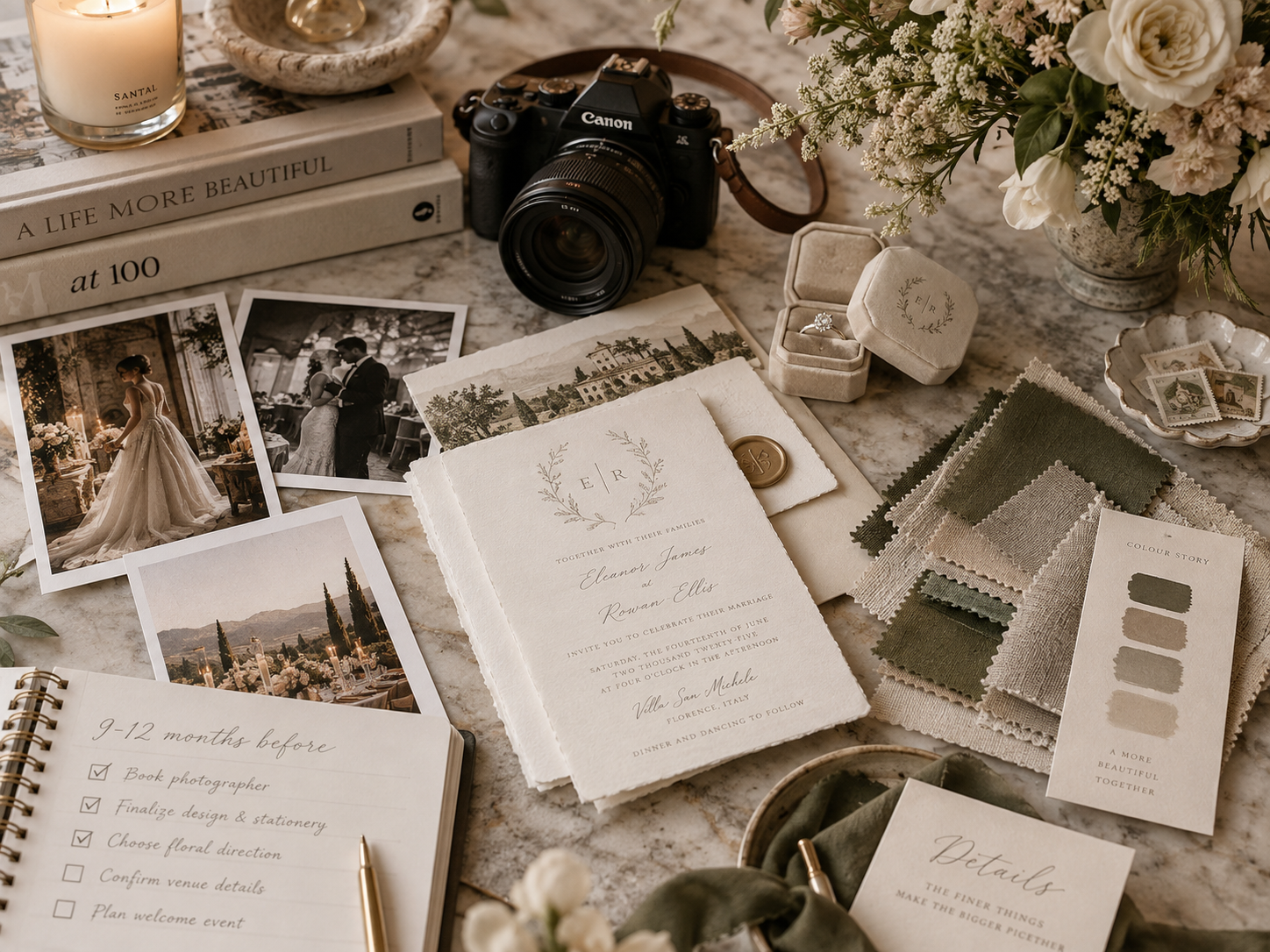
There is something wonderfully real about seeing your names printed together for the first time. Not written in a planning document or typed into a venue enquiry, but on an actual wedding invitation. Before approving anything, check every detail — and then check it again. Names. Date. Time. Venue. Then ask someone else to check it.
After you've stared at the same design for two weeks, your brain becomes impressively capable of reading what it expects to see rather than what's actually there. Your invitation doesn't need to explain everything. Keep the beautiful part beautiful. A simple URL or QR code can take guests to the additional details online without turning the invitation into an instruction manual.
3–6 months before: start seeing the wedding through your guests' eyes
By now, you know the wedding very well. Your guests don't.
Try to imagine arriving without any of the information currently living inside your head. Would you know where to park? Would you understand whether the ceremony and reception are in the same place? Would you know what “garden formal” means? Whether children are invited? When to arrive? How to get home? These small pieces of information make an enormous difference to how relaxed guests feel. And once your invitations have been sent, the RSVPs start arriving. There is something oddly satisfying about the first ones.
Yes, we'll be there. Then another. And another. The wedding suddenly has faces. Of course, there will eventually be someone who does not RSVP. There is always someone. You will probably message them, and they may respond, “Oh, I thought you knew we were coming!”
Try to love them anyway.
About three months before: the tiny decisions multiply
This is the stage nobody really shows you on Pinterest. You are no longer making five big decisions. You're making fifty tiny ones.
What time should hair and makeup start? Who is holding the rings? When does the photographer arrive? Which table is the university friend who knows your cousin but absolutely cannot sit beside your former colleague going on? Do you need menus? Where does the welcome sign go? Who takes the flowers after the ceremony? What song plays when you walk into dinner?Suddenly you understand why wedding planners own clipboards. This is also when your timeline starts to matter. Write down how the day is actually supposed to move, from getting ready to the final song, then share it with the people who need it.
You don't need to manage your wedding day minute by minute yourself. In fact, you shouldn't.
The planning exists precisely so that on the day itself, you can stop planning.

One month before: everything feels very real
The dress is hanging somewhere. The RSVPs are almost complete. Your home may contain mysterious boxes labelled CEREMONY and TABLE 4.You might find yourself practising your first dance in the kitchen while waiting for pasta to cook. You might suddenly have very strong feelings about candles. This is normal.
Now is the time to confirm rather than reinvent. Check the final guest numbers, confirm suppliers, finish the seating plan and check transport. Wear your wedding shoes around the house so they stop feeling like beautiful instruments of torture. Open your wedding website on your phone and go through it like a guest. Does the RSVP work? Does the map open correctly? Are the times right? Is the dress code understandable? Has anything changed since you first created it? Fix the practical things now. And resist the temptation to completely redesign the wedding because you saw something beautiful on Pinterest yesterday.
Your wedding is allowed to be finished.
The week before: something changes
For months, the wedding has been a future event. Then suddenly people start arriving. A bridesmaid texts that she's packed. Your mother asks where something should go. Flowers are being ordered specifically for your wedding. The weather forecast becomes an object of dangerous fascination. You refresh it. Then refresh it again. As if your commitment might somehow persuade the clouds. If you have a weather contingency, check it once. Then close the app.
At this point, anything going to the venue should be packed and clearly labelled. Give your timeline to the wedding party and make sure somebody other than you knows where important things are. Most importantly, choose a person who can answer questions on the wedding day. Because if a supplier needs to know where the candles go at 10:30 that morning, you should not be the person they call.
You have somewhere else to be.
The night before
This part feels different for everyone. Maybe you'll have dinner surrounded by family. Maybe you'll be in a hotel room with your best friend. Maybe everything will suddenly become quiet. There may be a moment when you finally realise:
Tomorrow I'm getting married. Try not to spend that moment checking table numbers. Eat. Drink water. Charge your phone. Make sure the rings are where they're supposed to be. And then go to bed — even if you aren't entirely convinced you'll sleep.
Whatever still hasn't been done can probably survive without being done.
And then, somehow, it's your wedding day
The day you've spent months organising arrives with absolutely no interest in whether you're ready for it.
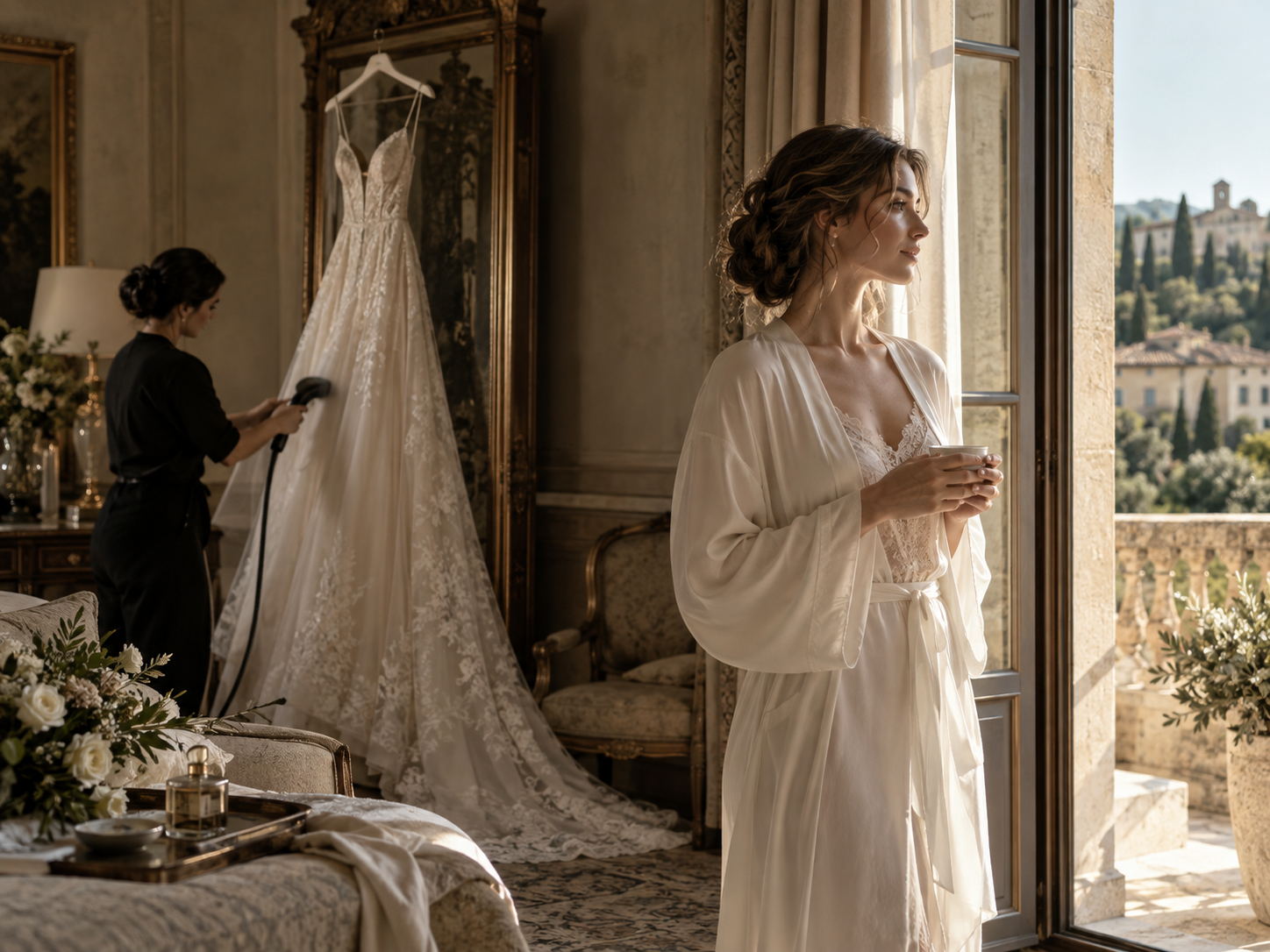
Someone is steaming a dress. Music is playing somewhere. Flowers arrive. People keep asking if you need anything. And suddenly all those months of decisions have become an actual place you can stand inside. This is where the checklist ends.
Because your job today isn't to organise the wedding. Your job is to notice it.
Notice your mum's face when she sees you dressed. Notice your partner's expression when you finally find each other across the room. Look at the tables before everyone sits down. Look at all those people who travelled, dressed up, changed their plans, booked hotels and came because they love you.Take five minutes alone together if you can. The day moves astonishingly fast. Something may go wrong. A flower might fall over. Someone may be late. The weather might change. A song might start five seconds too early.And there's a very good chance you won't care. Because when people talk about their wedding years later, they rarely say:
“Thank goodness the napkins were exactly the right shade of ivory.”
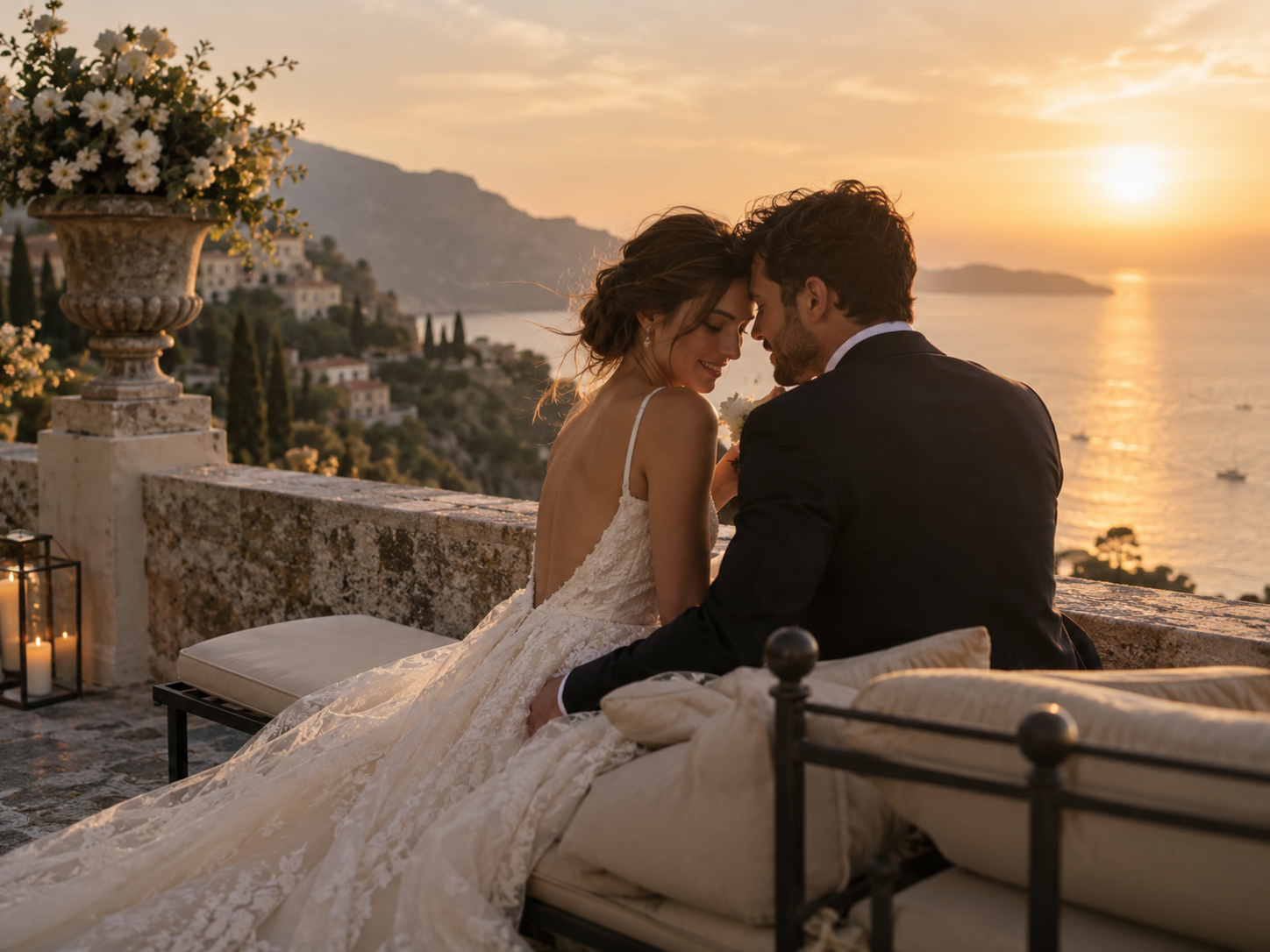
They remember someone's shaking hands during the vows. Their grandmother dancing. Their best friend's speech. The moment the doors opened. How strange and wonderful it felt to say husband, wife, married for the first time.
The part no checklist can plan
Planning matters. It gives the day structure, helps your guests feel cared for and allows all the people you've hired to create what you've imagined. So make the lists. Book the suppliers. Check the timings. Send the invitations. Build the website. Ask the questions. But somewhere along the way, remember what all of those things are actually for. You're not planning the world's most perfect event. You're creating a place and a moment in time where the people you love can gather to watch you choose one another. And after the flowers have gone, the dress has been packed away and the last photograph has been delivered, that's the part that stays.
Not everything has to be perfect to become a beautiful memory.
Sometimes the smallest moments become the ones you remember most.
A Little Something to Make Planning Easier
Download the Free Wedding Planning Checklist
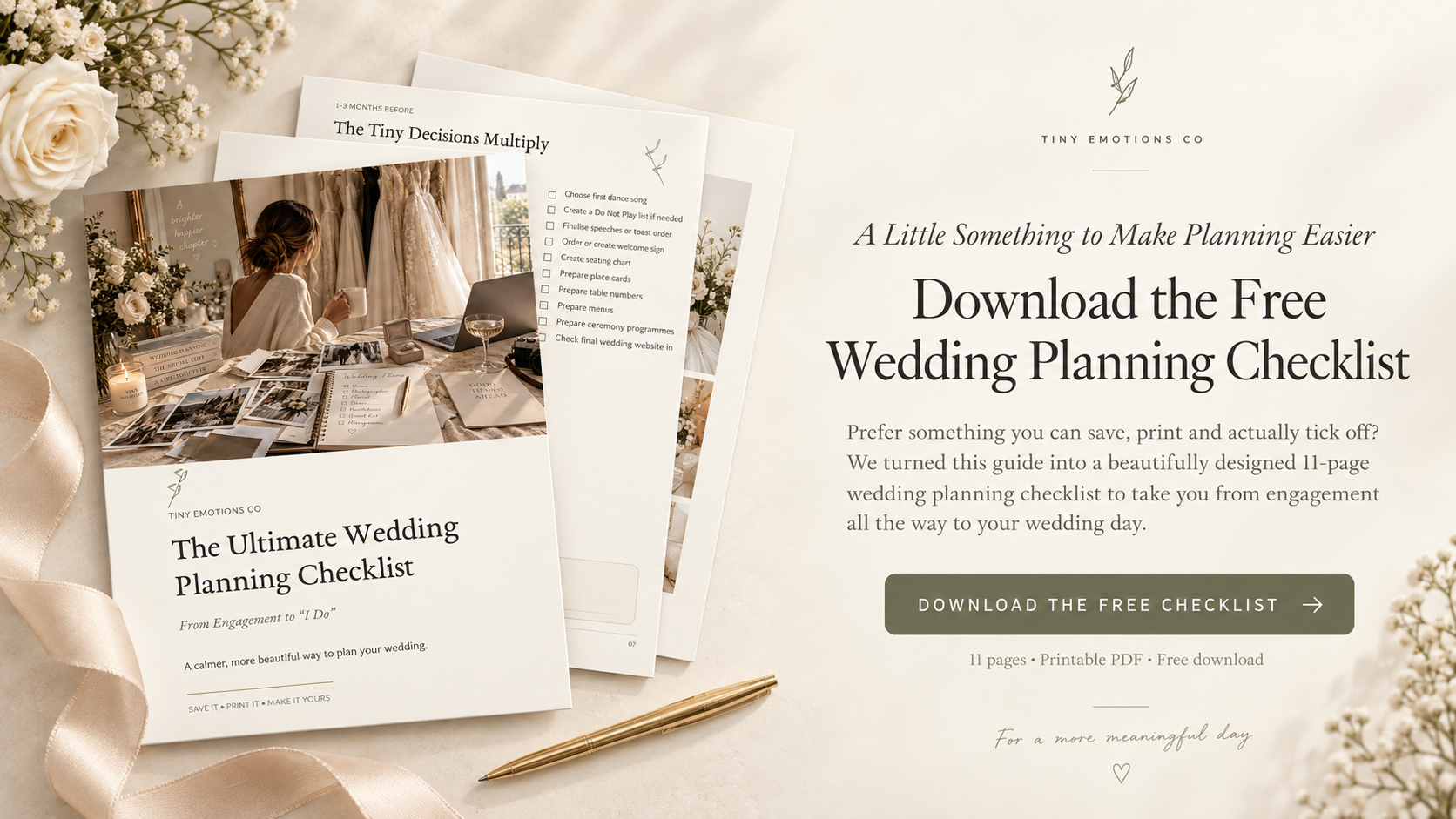
Prefer something you can save, print and actually tick off? We turned this guide into a beautifully designed 11-page wedding planning checklist to take you from engagement all the way to your wedding day.
GET YOUR FREE WEDDING CHECKLIST ↓