
15 Questions Your Wedding Guests Will Ask — Answer Them Before They Do
The messages start earlier than you think. A cousin asks if she can bring her new boyfriend.
A friend wants to know what “semi-formal garden” actually means. Someone’s mother texts: Are children invited? Then comes parking. Hotels. Gifts. Plus-ones. The RSVP deadline. And eventually: What happens between the ceremony and dinner?
None of these questions are rude. They are simply the questions people ask when they care enough to come — and when they don’t have one clear place to look. You can answer them one by one for months.
Or you can answer them once. A thoughtful wedding website can quietly hold all of these little details for you, giving your guests somewhere to check before they send another message.
Here are the fifteen questions your wedding guests will almost certainly ask — and the kind of answers that make the day easier for everyone, including you.
1. Where is the wedding?
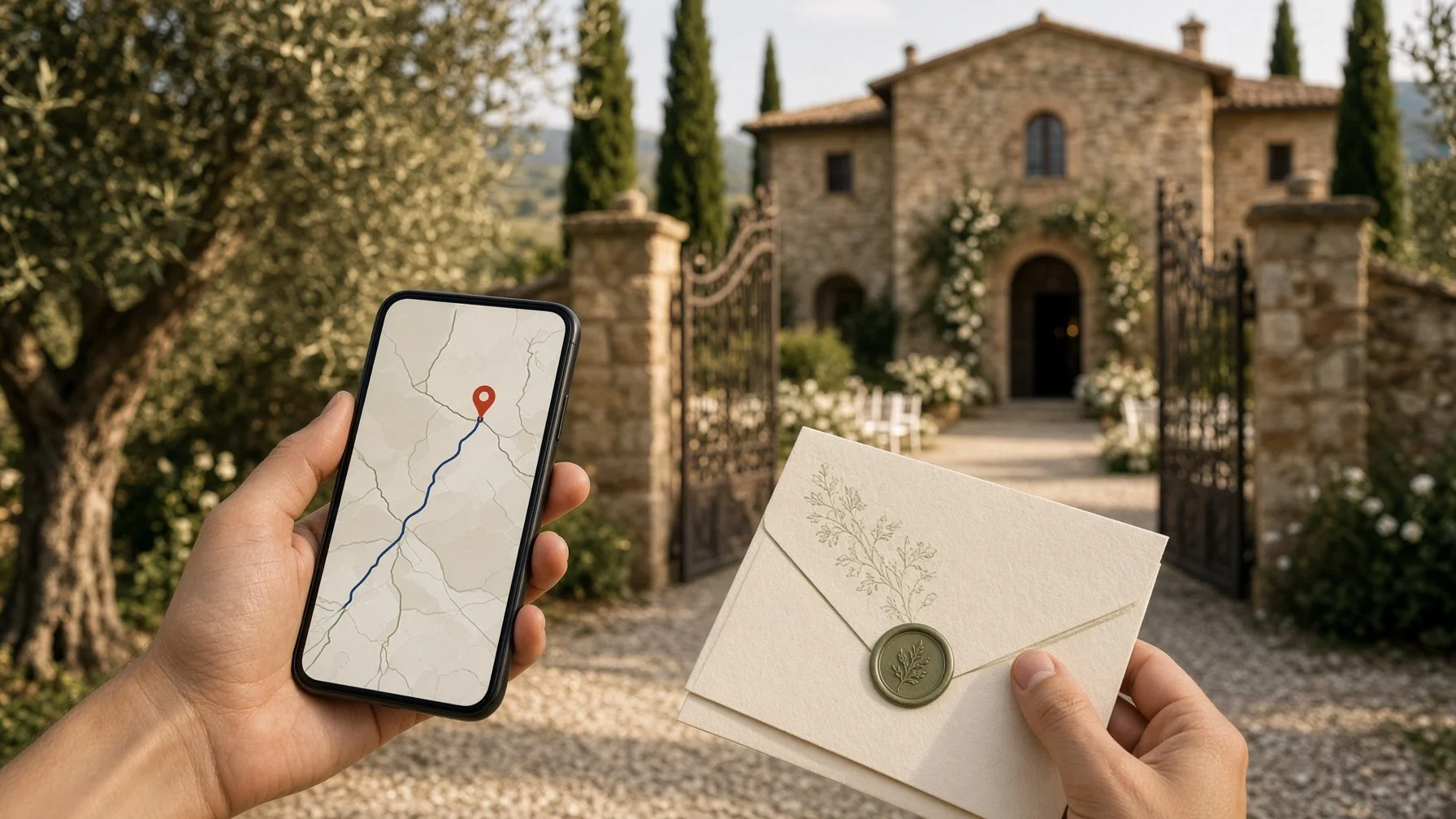
Start with the obvious, but don’t assume everyone already knows. Give the full venue name, street address and a direct map link. If your ceremony and reception are taking place in different locations, make that clear from the beginning. Guests may be planning trains, taxis, accommodation or even flights around this one detail. The easier it is to find, the fewer last-minute “Is this the right entrance?” messages you’ll receive on the morning of your wedding.
2. What time should we arrive?
There is a difference between the ceremony start time and the time you actually want everyone in their seats.
Instead of simply writing “Ceremony — 2pm,” try: Doors open at 1.30pm. Please be seated by 1.50pm. Ceremony begins at 2.00pm.
That small amount of clarity prevents the scramble at the door just as you’re preparing to walk down the aisle.
3. Can I bring a plus-one?
Few wedding questions create more uncertainty than this one. Decide your rule early and communicate it clearly. Are invitations limited to named guests? Are long-term partners welcome? Does every single guest receive a plus-one? There is no universal right answer — only the one that works for your guest list, budget and celebration. Be warm, but be specific.
Ambiguity tends to create far more awkwardness than a kind and clear answer.

4. Are children invited?
If you’re planning an adults-only celebration, let parents know early enough to arrange childcare. You don’t need a long explanation. Something gentle such as “We adore your little ones, but our wedding day will be an adults-only celebration” is enough. If children are invited, it can also help to mention whether there will be a children’s menu, highchairs, a quiet space or anything else parents might need to know. This is one of those details that deserves a clear place on your wedding website — somewhere guests can quietly check without having to ask.
5. What’s the dress code?
Cocktail.
Smart casual.
Garden formal.
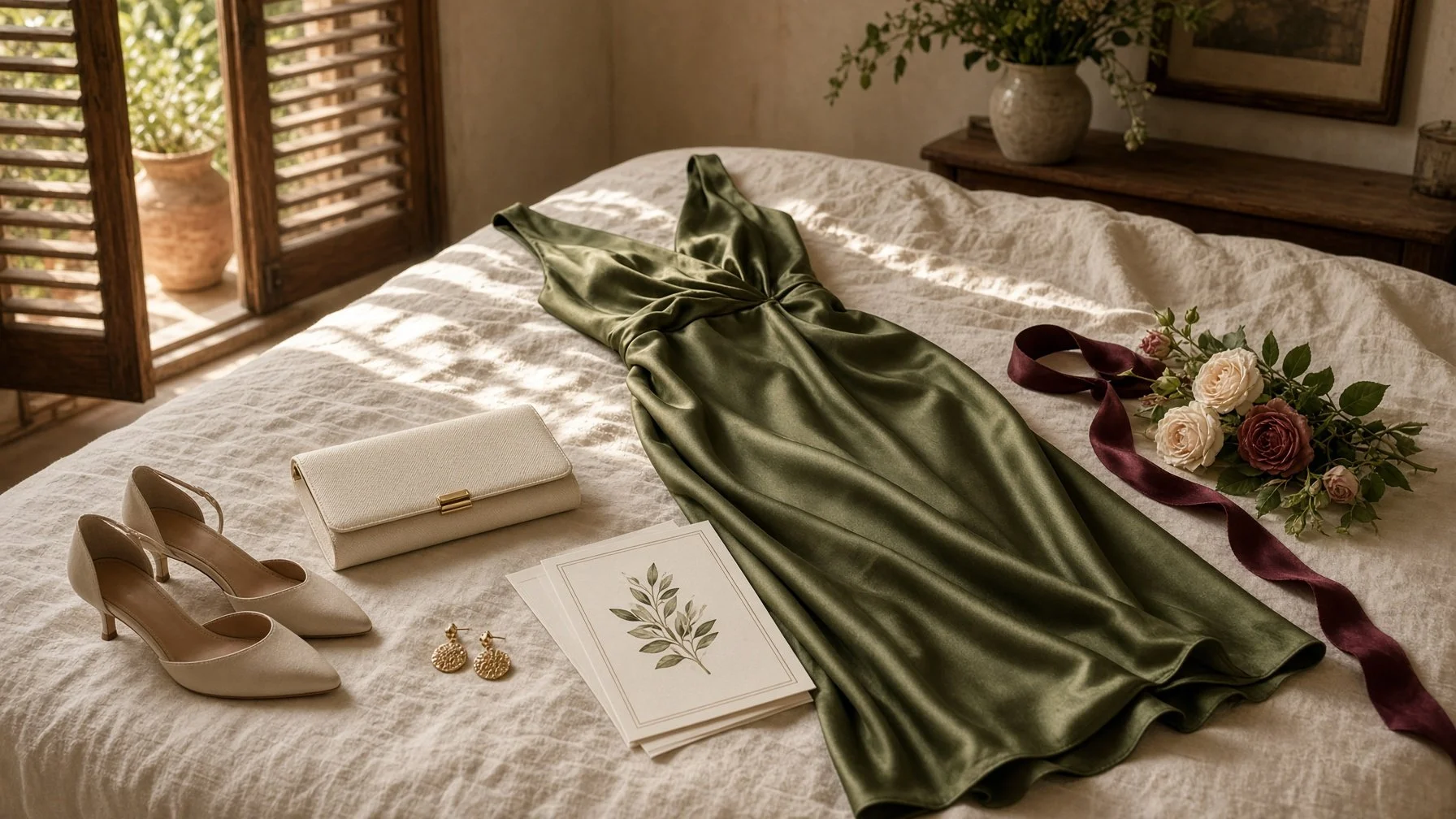
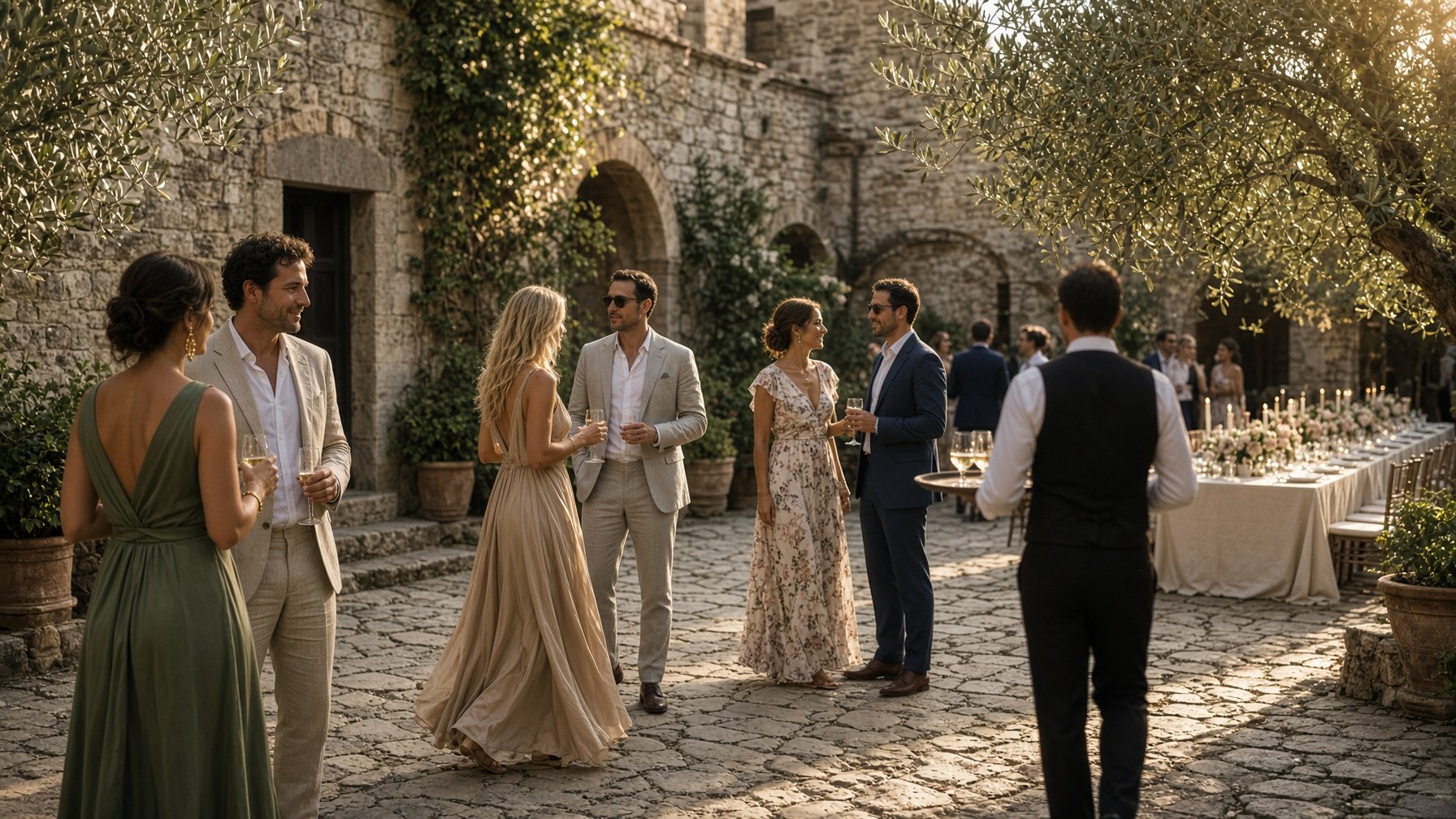
Beautiful words — until everyone starts interpreting them differently. Give your guests a little more than the label. Mention the overall feeling you’re imagining, whether the ceremony is outdoors, if heels might be difficult on grass, or whether black tie means full-length dresses and dinner jackets. If colour matters to the visual atmosphere of your wedding, you can include a small palette too. Not as a list of rules. More like a little visual hint that says: this is the world we’re creating. A few thoughtful examples can save twenty separate conversations in the weeks before your wedding.
6. Where should we stay?
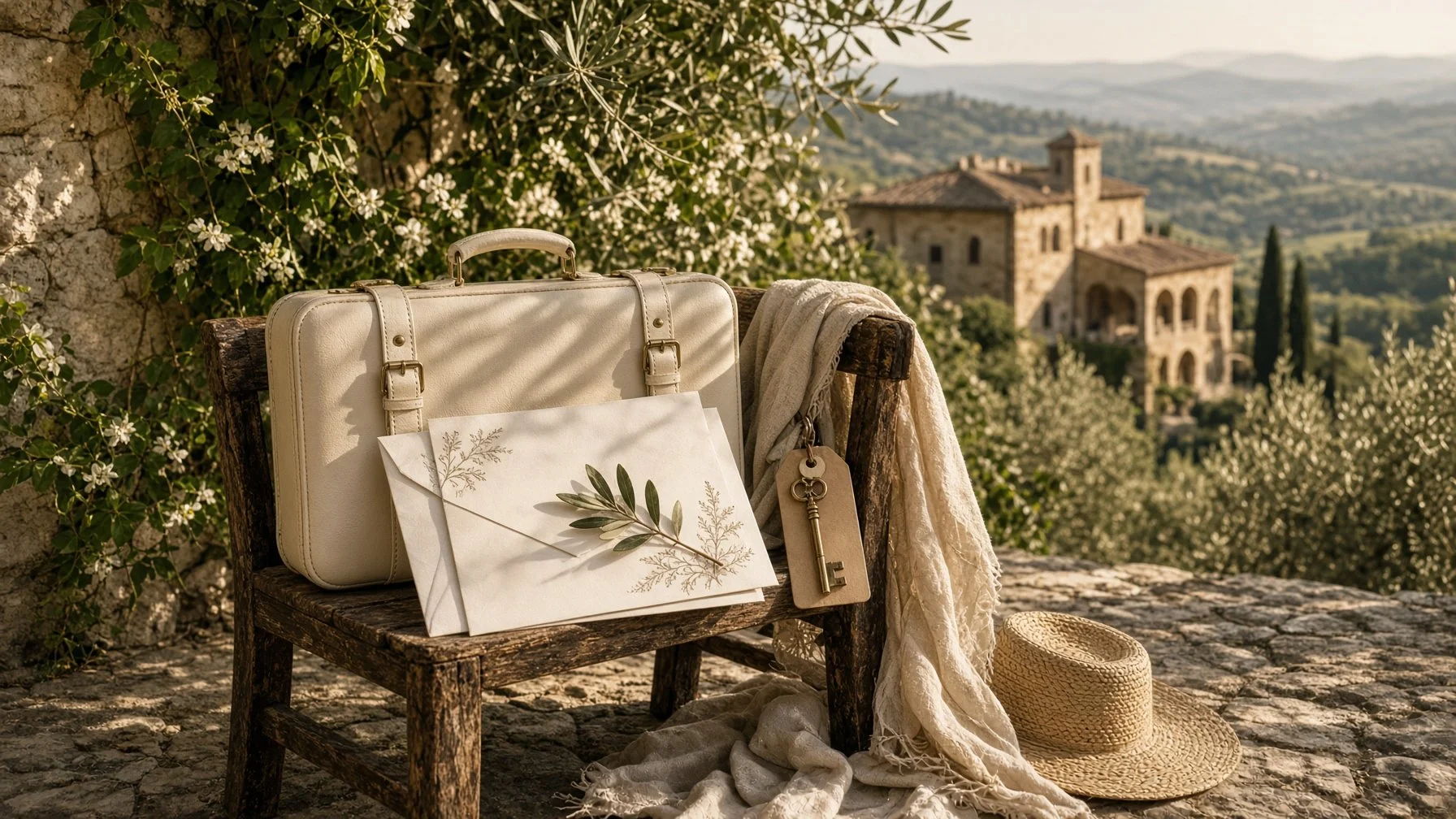
If guests are travelling, accommodation will probably be one of the first things they look for after receiving your invitation. Share two or three nearby hotels, cottages or apartments at different price points. If you have arranged a room block or negotiated a rate, include the booking instructions and deadline. For destination weddings especially, it helps to keep accommodation, venue and travel information together instead of scattering it across emails and messages. Your guests should be able to open one link and understand where they’re going, where they might stay and how the weekend fits together.
7. Is there parking?
It might not be the most romantic detail of wedding planning. It is, however, one of the details guests desperately want to know. Is parking available at the venue? Is it free? Limited? Valet only? Should guests use another car park and walk over? Will there be a shuttle? A single line of practical information now can prevent a beautifully dressed guest from driving in circles ten minutes before the ceremony.
8. How do we RSVP?
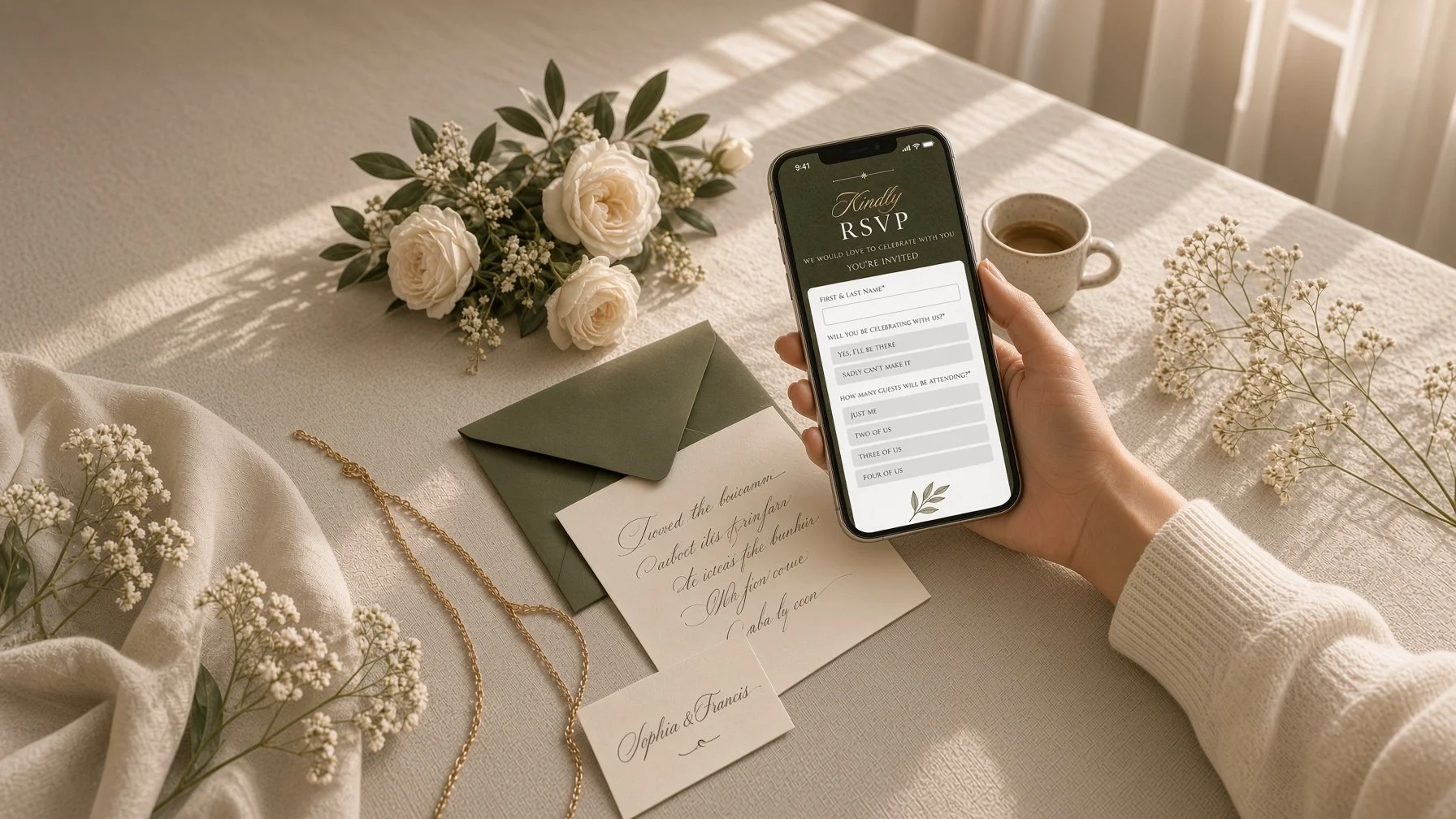
Make this wonderfully simple. One link. One method. One clear place to respond.
Paper RSVP cards can be beautiful, but try not to create several unofficial alternatives alongside them. A reply from your aunt on WhatsApp, another through your mother, one Instagram message and twelve proper RSVP submissions is how names — and dietary requirements — disappear. If you’re collecting responses online, keep your RSVP button easy to find and tell guests exactly what information you need from them. Attendance. Meal choices. Dietary requirements. Song requests. Transport.
Whatever matters for your day.
9. When is the RSVP deadline?
Don’t hide the date in tiny text at the bottom of the invitation. Place it beside your RSVP button and make it easy to remember. For many weddings, the deadline falls around three to four weeks before the celebration, although destination weddings and venues with earlier catering requirements may need more time. Work backwards from the dates your venue and suppliers give you. Then give yourself a little breathing room. There will almost always be someone you need to chase.
10. What should we buy as a gift?
Guests genuinely want to get this right. If you have a registry, link directly to it.
If you would prefer contributions towards a honeymoon, your first home or a particular experience, say so warmly. And if you truly don’t want gifts, you can say that too. You don’t need complicated wording or an apologetic paragraph. A thoughtful note is enough to remove the uncertainty and let guests know what would actually make you happy.
11. What happens between the ceremony and reception?
This is the part of the day couples understand perfectly — because they planned it — but guests often don’t. The ceremony finishes at 3pm. Dinner begins at 6.30pm. What happens in between?
A short wedding timeline immediately makes the day feel more considered:
3.00pm — Ceremony
3.45pm — Drinks on the terrace
4.30pm — Photographs & canapés
6.30pm — Dinner
It doesn’t need to include every photograph, speech or supplier arrival.
Guests just want to know where they are supposed to be and what is happening next.
12. Is transportation provided?
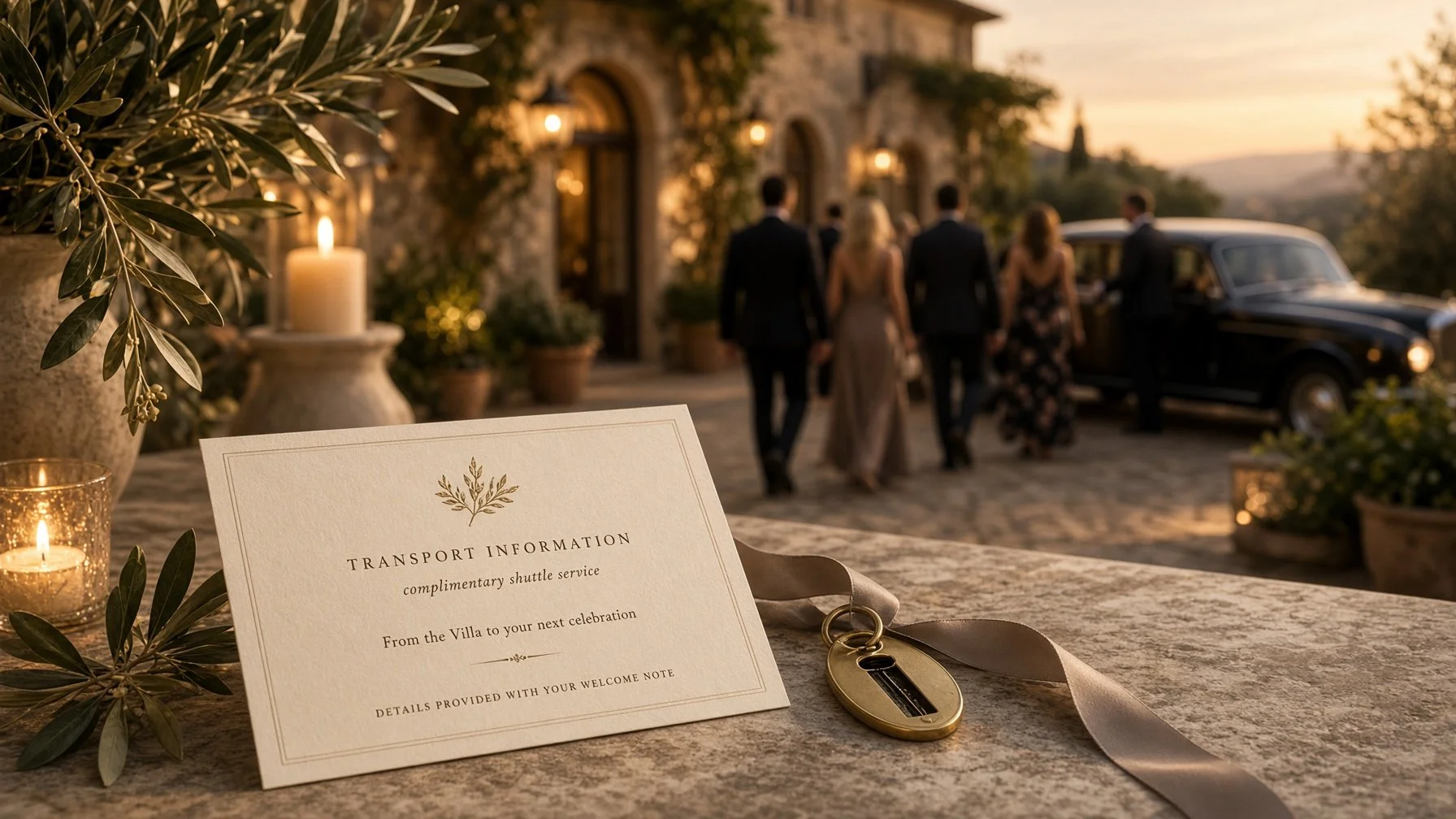
If you’ve arranged a shuttle from a hotel, include departure points and times. If taxis need to be booked in advance, tell people. If nothing has been arranged and guests will need to organise their own transport home, say that clearly too. Transport feels like a tiny planning detail until midnight arrives and forty people are trying to order the same three local taxis.
13. Can we take photographs?
More couples are choosing an unplugged ceremony — asking guests to keep phones tucked away while vows are exchanged. If that’s what you want, explain it gently. You can also tell guests when phones are welcome again. Perhaps you’d love everyone to take photographs at dinner. Maybe you’ve created a shared album. Maybe candid guest photos are one of the things you’re most excited to see the next morning.
There is no correct rule.
The important thing is simply that your guests know yours.
14. What happens if we’re late?
Nobody plans to be the person quietly opening a church door while the bride is walking down the aisle. But trains are delayed. Babysitters run late. People get lost. A gentle note can help:
Our ceremony will begin promptly at 2pm. If you arrive after the ceremony has started, our venue team will help you find the best moment to take your seat. Written down, it might feel overly practical.
On the day, it protects a moment you have spent months — perhaps years — imagining.
15. Who do we contact if we have a question?
Give guests one name and one way to reach them. It might be you before the wedding, your planner during the weekend, a maid of honour, sibling or trusted friend. This becomes especially useful in the final few days, when you really don’t want to be answering messages about parking while having your hair done. One person. One contact. One version of the answer.
The quiet solution
The funny thing is that almost all of these questions belong in the same place. Your wedding website. Not a complicated build. Not another account your guests need to create. Just one beautiful place for your names, your date, the venue, the schedule, dress code, travel details, gifts and a clear RSVP. Guests can open it when they book their hotel. Again when they choose what to wear. Again the night before when they suddenly can’t remember what time the ceremony starts. And you don’t have to answer the same question fifteen times. It’s one of the reasons we love a simple wedding website: every detail has a home, and your guests always know where to look.
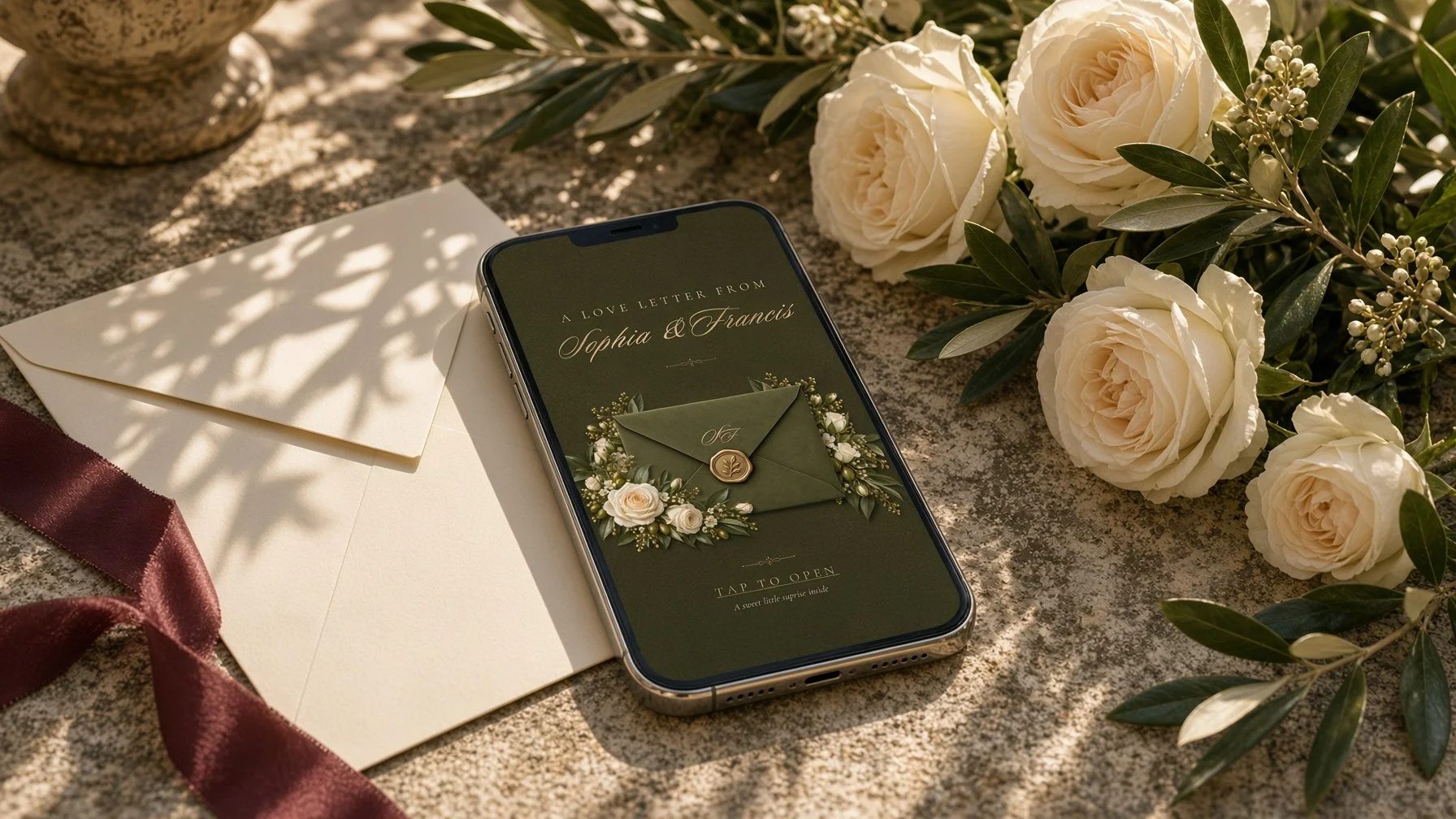
Our editable Tiny Emotions Canva wedding websites were created with exactly that in mind. You can personalise the names, dates, venue information, timeline, dress code, travel notes and RSVP, then share one beautiful link with your guests.
Olive & Ivory is made for soft, romantic celebrations with an Italian-inspired feeling.
Burgundy & Olive brings a warmer, richer mood — elegant, intimate and a little more evening.
All the little details your guests keep wondering about. And far fewer messages beginning with “Sorry, just a quick question…” Guests don’t ask because they want to make planning harder. They ask because they want to arrive calmly, dressed correctly, and completely present for you. Answer them once.
Then go back to the parts of the wedding that only you can do.
